How to Clean a Portable Ice Maker
To clean a portable ice maker, unplug it, drain it, and wash approved removable parts. Wipe the reservoir, descale mineral buildup with an approved cleaner, and complete the required rinses before making fresh ice.
On this page (8 sections)
- What do you need to clean a portable ice maker?
- How do you clean a portable ice maker step by step?
- How do you descale a portable ice maker?
- How do you rinse the machine after cleaning?
- What cleaning mistakes should you avoid?
- How often should you clean a portable ice maker?
- Why might a portable ice maker still make poor ice after cleaning?
- How should you choose a portable ice maker cleaning routine?
To clean a portable ice maker, unplug it, drain it, and wash approved removable parts. Wipe the reservoir, remove mineral buildup with an approved descaler when needed, and finish every required rinse before making fresh ice.
Routine washing removes loose residue from accessible surfaces; descaling targets hard mineral deposits. Neither task replaces the other, and a self-cleaning button doesn't remove the need to wash the basket and scoop.
What do you need to clean a portable ice maker?
Start with a soft cloth, clean water, a drain container, and a dry towel. Add mild dish soap for parts your manual allows you to wash, plus an approved descaler if mineral buildup needs attention.
Check the instructions for both the machine and cleaner before starting. Find the drain, identify removable parts, and confirm whether the machine has a dedicated cleaning cycle.
Avoid abrasive pads and sharp tools. Keep bleach and general household cleaners out of the machine unless its instructions expressly approve them for that use.
For a different countertop layout, see our guide to how to clean a countertop ice maker.
How do you clean a portable ice maker step by step?
Drain and wash first, then descale if needed and complete the rinse procedure. Keep the machine unplugged during manual washing, and reconnect it only when instructed for a powered cleaning or rinse cycle.
- Prepare the work area. Set the machine upright on a stable surface with room to reach the drain, and keep the outlet dry.
- Switch off and unplug. Remove and discard the ice so it can't come into contact with cleaning solution.
- Remove approved parts. Take out the basket, scoop, and any other parts identified as removable.
- Drain the reservoir. Place a container under the drain before opening it, following the model's procedure.
- Wash and wipe. Wash approved removable parts, then wipe accessible interior surfaces with a soft cloth.
- Descale if needed. Use the approved amount and cleaning method rather than guessing from reservoir size.
- Rinse and reassemble. Complete all required rinses, secure the drain plug, and replace dry parts before normal use.
Don't pull off covers or force a brush into hidden water passages. If a part doesn't come away as described in the manual, leave it attached.
How should you clean a portable ice maker basket and reservoir?
Wash the basket separately and wipe the reservoir gently, using soap only where permitted. Pay attention to basket corners, the scoop handle, and accessible seams where residue can collect.
Use a soft brush only on approved surfaces. Don't scrape the ice-making fingers or try to chip deposits off internal parts.
Rinse washed parts thoroughly, and don't assume they're dishwasher-safe. A dishwasher's heat and detergent may be unsuitable unless the machine's instructions allow that method.
How do you drain a portable ice maker?
Use its drain plug or specified drain procedure, with a container ready before you open it. Keep track of any cap, plug, or seal you remove.
Don't tip the machine to chase trapped water unless the instructions allow it. Once drained, check that the plug is seated correctly so the next fill doesn't leak onto the counter.
How do you descale a portable ice maker?
Use a machine-approved descaler at the directed concentration to remove mineral buildup. A hard, chalky coating points toward scale; loose residue on a basket calls for washing first.
Check the cleaner's dose, required water temperature, contact time, and rinse steps. Don't put a tablet directly into the reservoir unless the instructions call for that method.
If your machine and cleaner directions conflict, ask the machine manufacturer before proceeding. Never increase the dose or extend the soak to speed up the job.
Which cleaner should you choose for your machine?
Choose by model compatibility and dosing method first, then decide whether tablets or liquid fit your routine. Nickel-safe formulas address material compatibility, but that label doesn't make every cleaning method suitable for every machine.
The options below are descalers for mineral buildup. Don't treat them as sanitizers or substitutes for cleaning visible residue.
Choose STREALE for a tablet supply for regular upkeep when your machine permits this type of descaler. The pack contains 24 tablets, and STREALE describes its formula as safe for nickel, stainless steel, and aluminum-plated components.
Skip it for a built-in refrigerator ice maker or a machine that requires a different cleaning agent. Follow the dose for your appliance rather than assuming 1 tablet always equals 1 cleaning session.
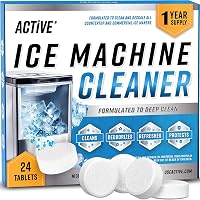
Choose ACTIVE if you want a tablet cleaner that names several ice maker brands, including Frigidaire, Silonn, Euhomy, and GE Profile 2.0. Its citric-acid formula targets hard-water buildup and is nickel-safe.
Skip it if your exact model's instructions don't permit the formula or method. Brand compatibility is a useful starting point, but it doesn't establish the dose or rinse procedure for every model.
Choose Affresh if you prefer measuring liquid and your freestanding machine permits this cleaner. It targets hard-water and mineral buildup, making it an alternative to dissolving tablets.
Skip it if you want tablet portions or your machine calls for another formula. Measure the directed amount; don't assume the whole bottle belongs in a small portable reservoir.
For a household vinegar option, read can you clean a countertop ice maker with vinegar?. For a GE Opal, follow the model-specific guidance in how to clean and descale a GE Opal ice maker.
How do you rinse the machine after cleaning?
Drain the cleaning solution and rinse every contacted surface and water path as directed. Depending on the machine, that can involve manual rinsing, reservoir refills, or powered rinse cycles.
Use fresh water for each required refill. Wiping the reservoir alone won't flush cleaner from channels used during a cleaning cycle.
Complete the full rinse sequence even if the machine looks clear. A lack of smell doesn't prove that cleaner has been removed, and making ice doesn't replace rinsing.
Before reconnecting power, dry the exterior and make sure the cord, plug, controls, and outlet area are dry. Discard initial ice when the machine or cleaner instructions require it.
What cleaning mistakes should you avoid?
Avoid stronger mixtures, skipped rinses, and water near electrical parts. These shortcuts can leave residue or damage a machine that only needs routine care.
- Mixing cleaning products: Never combine descaler, vinegar, bleach, soap, or other cleaners.
- Guessing the dose: Use the specified water volume and cleaner amount, not a stronger mix for heavier scale.
- Flooding the cabinet: Don't immerse the unit or spray water into vents, controls, or unapproved openings.
- Scraping deposits: Metal tools can damage surfaces; use the approved descaling method.
- Ignoring removable parts: A cleaning cycle doesn't scrub the scoop or basket for you.
- Restarting with residue: If foam, cleaner residue, or an unusual odor remains, stop and follow the approved rinse instructions.
A self-cleaning function can simplify circulation, but you still need to add the correct solution, drain, and rinse. If you're replacing a machine, compare self-cleaning countertop ice makers with those tasks in mind.
How often should you clean a portable ice maker?
Follow the machine's schedule and clean sooner when residue, scale, or odor appears. Heavy use and hard water can increase the need for attention.
A cleaner's suggested interval doesn't replace the appliance's care schedule. Routine washing may be needed between descaling sessions, especially when the scoop and basket get frequent handling.
Use fresh water and keep the scoop clean between uses. Before storage, drain and dry the machine as directed, and leave removable parts out until they're dry.
When bringing it back into use, check the reservoir and follow its cleaning and restart instructions. Don't simply refill water that has been sitting through storage.
Why might a portable ice maker still make poor ice after cleaning?
Setup, water supply, or a machine fault can cause poor output even after cleaning. Check the water level, drain closure, room around the vents, and any displayed error before repeating a descale.
Use the water type allowed by the machine, and keep it within its stated operating conditions. A different cleaner won't solve blocked airflow or an incorrectly fitted part.
If it makes no ice or very little, use our guide to why a countertop ice maker is not making ice. If you're comparing replacements, our portable ice maker guide can help narrow the options.
How should you choose a portable ice maker cleaning routine?
Choose washing for removable residue and an approved descaler for mineral scale. Knowing how to clean a portable ice maker starts with identifying which job it needs.
Choose STREALE for a permitted tablet routine, ACTIVE if its named brand compatibility helps you narrow the choice, or Affresh if you prefer liquid dosing. If none matches your machine's instructions, use the cleaner the manufacturer specifies.
For a detailed example of a model-specific routine, see how to clean and descale a GE Opal ice maker.
Frequently asked questions
How often should you clean a portable ice maker?
Follow your ice maker's cleaning schedule, and clean sooner if you notice residue, mineral scale, or an unusual odor. Water hardness and how often you use the machine can affect its care needs.
Drain and dry it before storage, then follow the restart instructions when you use it again.
Can you use vinegar to clean a portable ice maker?
Use vinegar only if your ice maker's manual approves it and gives a dilution and rinse method. Don't substitute a homemade mixture when the machine requires a specific cleaner.
Vinegar also shouldn't be mixed with other cleaning products, and it doesn't replace washing removable parts or completing the required rinses.
Do you need to throw away the first ice after cleaning?
Discard the first ice if the machine or cleaner instructions require it, after completing every rinse step. Making a batch of ice is not a substitute for rinsing the reservoir and water path.
If cleaner residue, foam, or an unusual odor remains, stop and follow the approved rinse procedure again.