Can You Clean a Countertop Ice Maker With Vinegar?
You can clean a countertop ice maker with vinegar if its manual approves it. Use the specified dilution, cleaning cycle, and rinsing steps; choose the recommended ice machine cleaner when vinegar isn't allowed.
On this page (9 sections)
- Can you clean a countertop ice maker with vinegar?
- What should you check before choosing vinegar or a cleaner?
- How do you clean a countertop ice maker with vinegar safely?
- How should you rinse after using vinegar?
- Which ice machine cleaner should you buy instead of vinegar?
- How can you keep deposits and odors from returning?
- What common cleaning mistakes should you avoid?
- Why might an ice maker still make poor ice after cleaning?
- Can you clean your countertop ice maker with vinegar, or should you buy cleaner?
You can clean a countertop ice maker with vinegar if its manual approves it. Use the specified dilution, cleaning cycle, and rinse steps before making ice for drinks.
Vinegar can help dissolve mineral scale, but it doesn't replace every care task. Washing the basket, removing loose debris, and sanitizing when required are separate jobs.
The useful choice is the method your machine accepts and you can follow correctly. A household bottle of vinegar, a liquid descaler, and cleaner tablets aren't interchangeable.
Can you clean a countertop ice maker with vinegar?
Yes, when your model has an approved vinegar method. If its instructions require another cleaner, choose that product instead.
White or chalky deposits often point to mineral buildup from water. Vinegar's acidity can help loosen those deposits, but the machine's materials determine whether it's suitable.
Cleaning removes dirt and residue, while descaling targets mineral deposits. Sanitizing is a separate process, so don't assume a vinegar cycle completes all 3 jobs.
Use the care section for your exact model, even when a similar-looking machine accepts vinegar. Shared size, shape, or brand doesn't establish the same cleaning procedure.
What should you check before choosing vinegar or a cleaner?
Check approved ingredients, dilution, and the cleaning procedure before buying anything. Broad compatibility claims don't replace your ice maker's instructions.
Look for any limits on acidic cleaners, required contact time, and directions for removable parts. A cleaner approved for the water circuit may not be the right choice for wiping every exterior surface.
For a dedicated cleaner, match the appliance type first. A countertop unit, a freestanding ice machine, and a built-in refrigerator ice maker can have different care requirements.
Next, choose a format you can measure and use correctly. Liquids need accurate measuring; tablets need the specified dose and preparation, which may include dissolving them before use.
If you're choosing a replacement machine, our countertop ice maker guide helps compare the machines themselves. Check access to the reservoir and drain alongside ice output and counter space.
How do you clean a countertop ice maker with vinegar safely?
Follow your model's vinegar procedure, starting with an empty machine and a prepared work area. Unplug it for draining, wiping, and removing parts unless the instructions specify otherwise.
Keep the manual nearby and set out a measuring cup, soft cloth, clean water, and a container for drained liquid. Move the machine only when it's safe to do so, keeping it level and away from sink splashes.
- Empty the ice and water. Discard existing ice and drain the reservoir as directed.
- Wash allowed removable parts. Clean the basket and scoop using the method in the manual; don't assume they're dishwasher-safe.
- Prepare the approved solution. Measure the vinegar and water exactly, then add it only where instructed.
- Run the specified process. Reconnect power only when needed for the approved cleaning cycle.
- Drain and rinse. Clear the solution from the reservoir and water path using the full rinse procedure.
- Restart as directed. Refit parts and discard any initial ice batches required by the manual.
Don't immerse the machine or direct water into vents and controls. Our guide to how to clean a countertop ice maker explains the broader routine.
How much vinegar should you use to clean a countertop ice maker?
Use the manual's amount and dilution, with the vinegar type or strength it specifies. There's no universal ratio for every countertop machine.
Don't fill the tank with straight vinegar or add extra to tackle stubborn scale. Longer contact time also needs approval, so avoid leaving the solution overnight unless instructed.
Should you run vinegar through the self-cleaning cycle?
Use vinegar in a self-cleaning cycle only when the instructions allow that combination. The button runs a process; it doesn't approve every cleaner.
Keep the machine in cleaning mode rather than ordinary ice-making mode when instructed. For a model-specific care guide, see how to clean and descale a GE Opal ice maker.
How should you rinse after using vinegar?
Complete every required rinse before making ice for drinks. Draining the tank once may leave solution elsewhere in the water path.
Use fresh water for each refill and follow any separate instructions for flushing the circuit. Clean the drain plug area and refit the plug correctly before filling again.
Don't use smell as the only check, and don't taste cleaning water. If vinegar odor remains after the required rinses, keep the machine out of use and ask the manufacturer about further flushing.
Making and discarding ice only counts as part of rinsing when the instructions say so. It doesn't replace a required drain-and-refill cycle.
Which ice machine cleaner should you buy instead of vinegar?
Buy a cleaner your machine permits, then choose the format that fits your routine. These 3 options suit different needs, but none overrides a model-specific cleaner requirement.
When does Essential Values Ice Machine Cleaner fit?
Essential Values suits people who prefer a measured liquid descaler for an approved countertop or portable ice maker. It also covers other residential and commercial ice machine types.
The 2-pack contains 16 fl oz bottles. Essential Values directs you to mix 4 oz with 1 gallon of water, then follow the machine's recommended cleaning instructions.
Choose it if that preparation matches your machine's method and you're comfortable measuring liquid. Don't pour a gallon into a smaller reservoir or change the concentration to make it fit.
Skip it when your manual specifies another formula or a different concentration. Resolve conflicting directions with the machine manufacturer before use.
When does Affresh Ice Machine Cleaner fit?
Affresh suits owners whose approved care method calls for a nickel-safe cleaner for mineral buildup. It's designed for freestanding ice machines, so countertop owners should confirm suitability for their exact model.
Choose it when hard water deposits are the problem and your machine accepts this formula. Affresh recommends use every 9 months or as needed, but that doesn't replace your appliance's care schedule.
Skip it if you're assuming that “freestanding” automatically includes your countertop model. A clear compatibility match matters more than choosing a familiar brand.
When might cleaner tablets suit your routine?
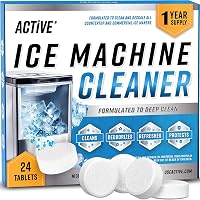
The STREALE tablets suit people who prefer tablet storage over liquid measuring, provided their machine permits the formula. They use citric acid and target mineral deposits; STREALE describes them as nickel-safe.
Choose them for an approved countertop, portable, or commercial machine. Follow the required dose and dissolving directions rather than dropping a dry tablet into the tank by guesswork.
Skip them for built-in refrigerator ice makers, which are excluded. The pack size doesn't establish how many cleaning cycles you'll get, since the required dose determines that.
How can you keep deposits and odors from returning?
Use regular draining, accessible-part cleaning, and scheduled descaling to reduce repeat buildup. Descaling frequency depends on water conditions, use, and your machine's instructions.
Don't leave old water sitting through long breaks in use. Before storage, drain and dry the machine as directed, including removable parts and accessible damp areas.
Use only water types your model accepts. Our guide to using distilled water in a nugget ice maker explains why switching water isn't a universal solution.
Keep the scoop clean and avoid reaching into the basket with dirty hands. A descaling cycle doesn't remove the need to care for surfaces that touch finished ice.
What common cleaning mistakes should you avoid?
Avoid mixing cleaners, guessing doses, and extending soak times. Never mix vinegar with bleach or another cleaning product.
Don't scrape scale with a knife, metal brush, or other sharp tool. Use only approved tools, and repeat a treatment only when the instructions permit it.
Don't add cleaner to drinking ice or run a normal ice-making cycle unless the cleaning procedure specifically requires it. Empty the basket first so no one mistakes old ice for fresh ice.
A portable machine still needs careful draining and rinsing. See how to clean a portable ice maker for help organizing that routine.
Why might an ice maker still make poor ice after cleaning?
Cleaning won't solve every cause of slow or stopped ice production. Water level, room conditions, blocked airflow, and error messages need their own checks.
A second acid cycle isn't the next step for every symptom. Follow our guide to why a countertop ice maker is not making ice before repeating treatment.
If you find slime, recurring discoloration, or persistent odor, stop serving the ice and follow the manufacturer's cleaning and sanitizing guidance. Descaling alone may not address the problem.
Can you clean your countertop ice maker with vinegar, or should you buy cleaner?
Choose vinegar when your manual provides a clear method. Buy a dedicated cleaner when the machine requires one or approves a format you'll find easier to use correctly.
Pick Essential Values for measured liquid preparation, Affresh for an approved freestanding machine needing a nickel-safe formula, or STREALE for an approved tablet routine. Skip any option that conflicts with your model's instructions.
Before starting, use our countertop ice maker cleaning guide to organize the job. Keep your manual beside it for the exact dose, cycle, and rinse requirements.
Frequently asked questions
Can I use white vinegar to clean a countertop ice maker?
Yes, if your machine's manual approves white vinegar and provides a cleaning method. Follow its dilution, contact time, and rinse directions rather than borrowing instructions from another model.
If the manual requires a dedicated ice machine cleaner, use that cleaner instead, even if vinegar works in another appliance.
How much vinegar do I put in a countertop ice maker?
Use the amount and dilution specified in your ice maker's manual. There is no single vinegar ratio that fits every countertop machine, and reservoir capacity alone doesn't establish the right dose.
If no vinegar method appears in the instructions, ask the manufacturer before adding it to the water path.
Should I run ice after cleaning an ice maker with vinegar?
Finish the required rinses before restarting ice production, then discard any batches the manual tells you to discard. Making ice is not a substitute for draining and rinsing the cleaning solution.
If vinegar odor remains after the full rinse procedure, don't serve the ice; ask the manufacturer for guidance.
Can vinegar damage a countertop ice maker?
Vinegar can be unsuitable for some ice maker materials or cleaning systems, especially when used at an unapproved strength or left too long. Use it only under your model's instructions, and never mix it with other cleaners.
A stronger solution or longer soak is not a safe shortcut.